Easy Homemade Croissants
Highlighted under: Sweet Craft
I always wanted to create perfectly flaky and buttery croissants at home. After numerous trials, I finally found a method that works wonders, saving me both time and effort. Using simple ingredients, I’ve turned a seemingly daunting task into an enjoyable baking session. The satisfaction of pulling golden-brown croissants from the oven is utterly rewarding, and the delightful aroma that fills my kitchen is an experience I cherish. Whether served with breakfast or as a snack, these croissants are sure to impress anyone who tries them.
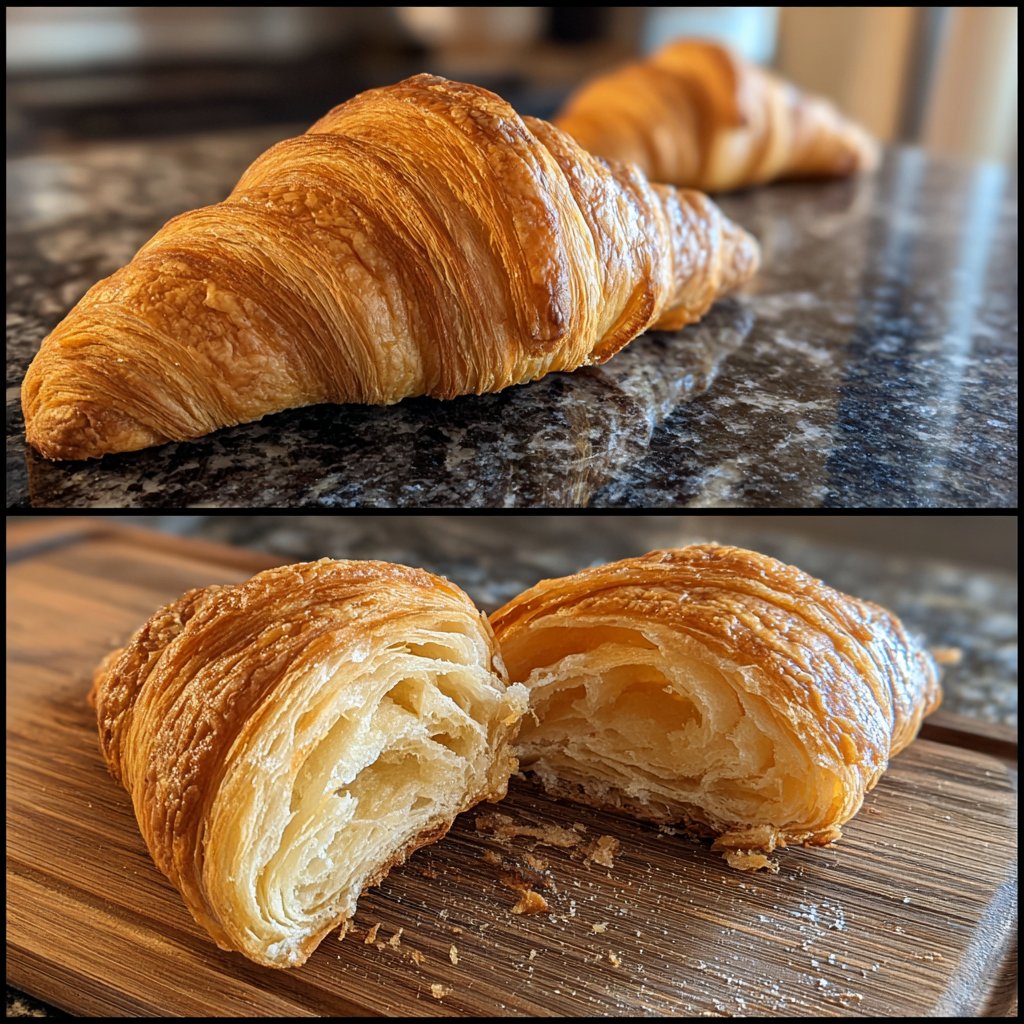

During my quest to master the art of French pastries, I stumbled upon the perfect croissant recipe that transformed my baking skills. With each attempt, I learned the importance of keeping everything cold—this makes dough rolling a breeze and keeps the butter firm, ensuring those lovely airy layers. A simple trick I found particularly useful was to generously flour the work surface; it prevents sticking and helps maintain the dough's texture.
The first time I pulled a batch from the oven, the golden, flaky layers had me grinning from ear to ear! This recipe blends technique and love, resulting in an unforgettable treat that makes all the effort worthwhile. I can’t emphasize enough how satisfying it is to serve these warm croissants to family and friends!
Why You Will Love This Recipe
- Flaky, buttery layers that melt in your mouth
- A rewarding baking experience with impressive results
- Perfect for breakfast, brunch, or as an elegant snack
Mastering the Dough
Creating the perfect croissant dough is all about balance. The combination of all-purpose flour, warm milk, sugar, salt, and yeast forms the foundation of your croissants. I recommend using a kitchen scale for precise measurements, ensuring consistent results. The warm milk activates the yeast, creating an airy texture. Kneading the dough for about 10 minutes is crucial; it develops gluten, which leads to that delightful chewy texture.
After kneading, letting the dough rise for one hour is vital for fermentation. Look for the dough to double in size and become slightly puffy. This resting period not only enhances the flavor but also improves the dough's extensibility, making it easier to roll out and fold over the butter later.
Incorporating Butter for Flakiness
Encasing the cold butter in the dough is perhaps the most critical step. The reason you use cold butter is that it creates steam pockets during baking, leading to flaky layers. When rolling out the dough, aim for a thickness of about 1/4 inch. If the dough is resistant to rolling, don’t hesitate to let it rest for a few minutes; this will relax the gluten. Failing to do so might result in tough croissants.
After folding the dough into thirds and refrigerating it, you’re preparing for the lamination process, which is essential for achieving those multiple flaky layers. I usually chill the dough for 30 minutes, but if you're in a warm environment, a bit longer in the fridge might be necessary to keep the butter solid.
Shaping and Baking Like a Pro
When cutting the dough into triangles, maintaining equal sizes is important. This ensures that all croissants bake evenly. I find that a pizza cutter works efficiently for this task. As you roll each triangle, try to apply gentle pressure while folding towards the tip to avoid losing the shape. A snug roll is crucial for a well-defined crescent shape.
Finally, the egg wash does more than provide a beautiful golden color; it also gives a slight sheen to the croissants. For best results, ensure that your oven is fully preheated to 400°F (200°C) before baking, as an insufficiently hot oven will yield soggy, undercooked layers. Bake them until they are golden brown, usually around 20 to 25 minutes, and allow them to cool slightly before enjoying the fruits of your labor.
Ingredients
Gather the following ingredients to make these delightful croissants:
Dough Ingredients
- 4 cups all-purpose flour
- 1/4 cup granulated sugar
- 1 tablespoon salt
- 2 teaspoons instant yeast
- 1 1/2 cups milk (warm)
- 1 cup unsalted butter (cold, and cut into cubes)
Egg Wash
- 1 egg (beaten)
- 1 tablespoon milk
Make sure to use fresh ingredients for the best results!
Instructions
Follow these steps carefully to create your homemade croissants:
Prepare the Dough
In a large bowl, mix the flour, sugar, salt, and instant yeast. Slowly add the warm milk and stir until a dough forms. Knead for about 10 minutes until smooth, then cover and let rise for 1 hour.
Incorporate Butter
After the dough has risen, roll it out on a floured surface into a rectangle. Place the cold butter cubes in the center, folding the dough over to encase the butter. Roll out again and fold into thirds, then wrap in plastic and refrigerate for 30 minutes.
Shape the Croissants
Roll the dough into a rectangle once more, then cut into triangles. Starting from the base, roll each triangle up to form a crescent shape. Place on lined baking sheets and let rise for 30 minutes.
Bake
Preheat your oven to 400°F (200°C). Brush the risen croissants with beaten egg mixed with milk, then bake for 20-25 minutes until golden brown. Enjoy warm!
These croissants are best enjoyed fresh but can be stored in an airtight container for a couple of days.
Pro Tips
- For best results, ensure all ingredients are at their proper temperatures. Overworking the dough can lead to tough croissants, so handle gently and with care.
Storing and Freezing Croissants
If you have leftover croissants, store them in an airtight container at room temperature for up to 3 days. To maintain their flakiness, reheating them in a toaster oven or regular oven for a few minutes is best. This brings back their freshly baked texture, making them just as delightful as the first day.
For longer storage, consider freezing the unbaked croissants. After shaping them, place them on a baking sheet to freeze individually. Once frozen, transfer them to a zip-top bag. When you're ready to bake, you can bake them straight from the freezer; just increase the rise time by about 15 minutes, and then proceed to bake as instructed.
Ingredient Substitutions and Variations
If you're looking to make a dairy-free version, you can substitute the milk with a plant-based alternative such as almond milk or oat milk. Just be sure to use unsweetened varieties for the best flavor balance. For the butter, vegan butter works just as well and will still yield flaky results.
For a fun twist, consider adding fillings to the croissants. Chocolate chips, almond paste, or even ham and cheese can be rolled inside the triangles before shaping. Experimenting with flavors elevates the basic croissant recipe, making it exciting for your palate and perfect for any occasion.
Troubleshooting Common Issues
If your croissants don’t rise enough, double-check that your yeast is fresh. Using expired yeast can lead to a flat texture. Additionally, make sure your dough is kept in a warm, draft-free place during rise times; a cooler environment can slow down the fermentation process.
Another common issue is a dense or tough texture. This can occur if the dough was over-kneaded or not allowed to rest adequately. Proper intervals for resting and gentle handling while shaping can mitigate this problem and give you a light, airy croissant.
Questions About Recipes
→ Can I use whole wheat flour?
Yes, you can substitute some all-purpose flour with whole wheat flour, but the texture may differ slightly.
→ How can I store leftover croissants?
Store them in an airtight container at room temperature for up to two days. For longer storage, freeze them in a freezer-safe bag.
→ Can I make the dough in advance?
Absolutely! You can prepare the dough and refrigerate it overnight before shaping and baking.
→ Do I have to use unsalted butter?
Using unsalted butter is preferred as it allows you to control the saltiness of your dough.
Easy Homemade Croissants
Created by: Daphne Collins
Recipe Type: Sweet Craft
Skill Level: Intermediate
Final Quantity: 12 croissants
What You'll Need
Dough Ingredients
- 4 cups all-purpose flour
- 1/4 cup granulated sugar
- 1 tablespoon salt
- 2 teaspoons instant yeast
- 1 1/2 cups milk (warm)
- 1 cup unsalted butter (cold, and cut into cubes)
Egg Wash
- 1 egg (beaten)
- 1 tablespoon milk
How-To Steps
In a large bowl, mix the flour, sugar, salt, and instant yeast. Slowly add the warm milk and stir until a dough forms. Knead for about 10 minutes until smooth, then cover and let rise for 1 hour.
After the dough has risen, roll it out on a floured surface into a rectangle. Place the cold butter cubes in the center, folding the dough over to encase the butter. Roll out again and fold into thirds, then wrap in plastic and refrigerate for 30 minutes.
Roll the dough into a rectangle once more, then cut into triangles. Starting from the base, roll each triangle up to form a crescent shape. Place on lined baking sheets and let rise for 30 minutes.
Preheat your oven to 400°F (200°C). Brush the risen croissants with beaten egg mixed with milk, then bake for 20-25 minutes until golden brown. Enjoy warm!
Extra Tips
- For best results, ensure all ingredients are at their proper temperatures. Overworking the dough can lead to tough croissants, so handle gently and with care.
Nutritional Breakdown (Per Serving)
- Calories: 250 kcal
- Total Fat: 15g
- Saturated Fat: 9g
- Cholesterol: 45mg
- Sodium: 170mg
- Total Carbohydrates: 28g
- Dietary Fiber: 1g
- Sugars: 3g
- Protein: 6g